What types of chefs are there and what are their roles?

If you love to cook and imagine yourself working in a professional kitchen, you have probably wondered what types of chefs there are. There are those who lead the team, those who run a station, and those who specialize in desserts. Each role contributes something different, and while the organization varies by restaurant, these are the most well-known.
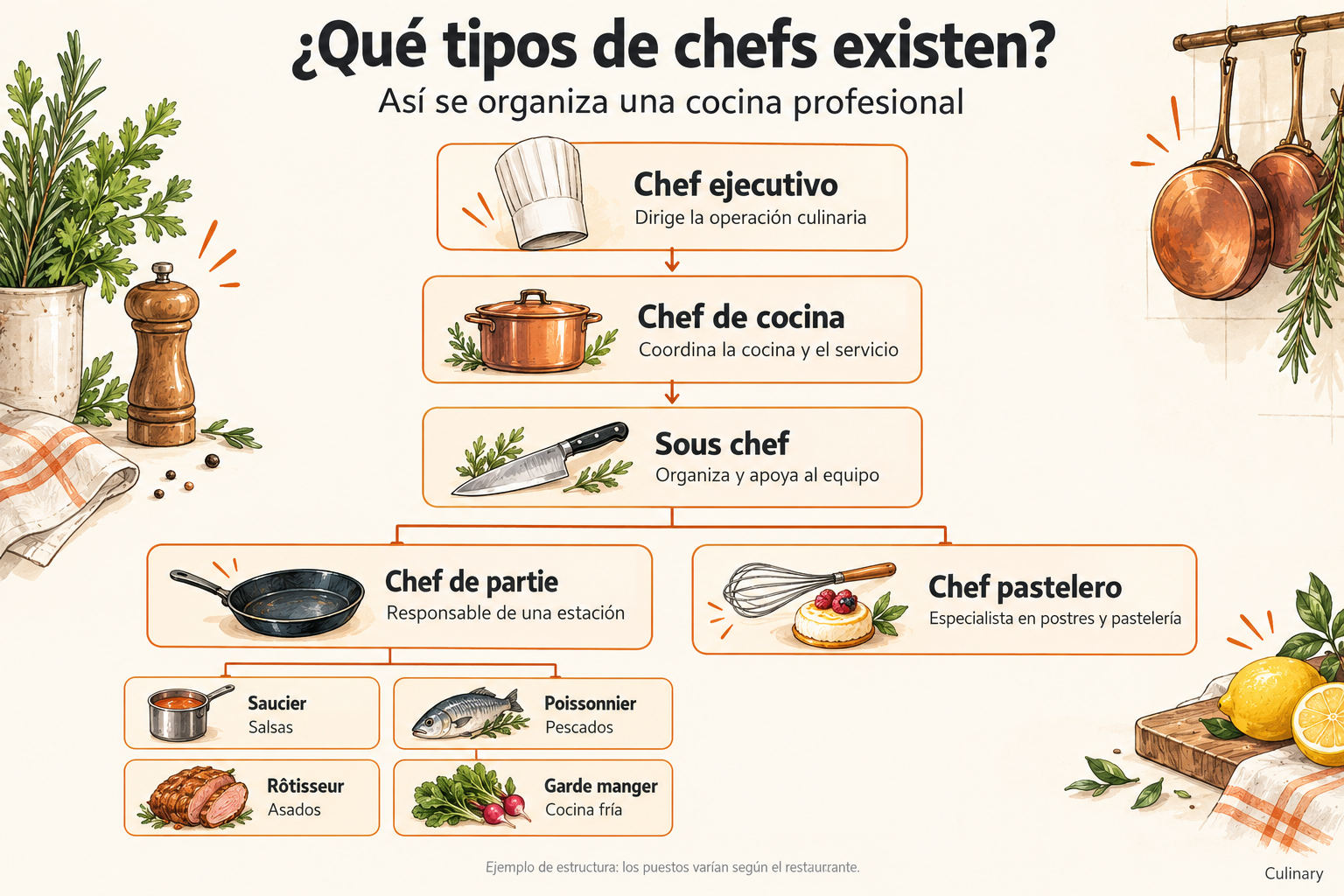
They have a complete overview of the operation of one or more culinary spaces. They define menus, oversee costs, and set quality standards. In addition to knowing how to cook, they need to organize, make decisions, and lead teams.
They are in charge of the day-to-day: coordinating the team and ensuring that preparations and service go as expected. In smaller restaurants, they may also fulfill the duties of the executive chef.
They are second in command and a key player in keeping everything running smoothly. They organize tasks, supervise stations, and help resolve unexpected issues. When the head chef is away, they can take their place.
They are responsible for a kitchen station and the preparations that come from it. Some specialties have French names that you will surely hear:
- Saucier: prepares sauces and sautés.
- Poissonnier: is in charge of fish.
- Rôtisseur: works with roasts.
- Garde manger: prepares cold dishes, such as salads, pâtés, and terrines.
Their domain is desserts and pastry. They work with doughs, creams, and chocolate, combining creativity and precision. Depending on the establishment, they may also lead their own team.
Practice will help you discover what you enjoy most: creating desserts, mastering a station, or coordinating a team. In the Bachelor's Degree in Culinary Arts at Culinary, in Tijuana, you can begin to explore those paths with a three-year program that is 70% practical and 30% theoretical.
You will learn about sweet and savory cooking, management, and hospitality, and you will complete internships in restaurants starting in your first year to get an up-close look at the profession.